Putting your data "in the cloud" means handing over responsibility for the custody and availability of your information to a third party.

Major players such as Amazon (AWS), Microsoft (Azure) and Google have built a business model that convinced millions of companies to migrate their data to shared infrastructure — charging monthly, per user, with price increases the customer cannot control.
The concept of cloud computing seems practical and appealing. But where, exactly, is your company data? Who has access to it? And what happens when something goes wrong?
Many companies treat the public cloud as inherently safe — as if their data were protected by some higher force. In practice, the risks are concrete and well documented.
1. Someone else is looking after your data
The public cloud is a shared infrastructure outside your company. When you subscribe, you delegate responsibility for your data security to a third party.
Although providers guarantee protection, the reality is that tight budgets and the pressure to scale often make security more of a marketing message than an operational priority.
2. Cyber attacks

Whenever you store data on the internet, you face the risk of a cyber attack. In the public cloud, a single physical server is shared by hundreds of tenants — making these environments preferred targets for attackers due to the volume of data concentrated in one place.
When something goes wrong at the provider, the impact hits a broad group of companies simultaneously. For attackers, it is far more efficient to compromise a large provider than to target individual businesses.
3. Insider threats
External hackers may be the least of your problems. The greatest threats often come from within: disgruntled employees, former staff, or conflicting internal interests.
In the public cloud, an administrative credential in the wrong hands can allow copying, altering or destroying entire datasets — documents, virtual machines, customer databases — without necessarily being detected in time.
4. Government surveillance

Mass surveillance scandals over the past decade have shown that governments can access data stored with cloud providers — in many cases without the owner s knowledge or consent.
In Brazil, law-enforcement operations have resulted in seizure of cloud servers, hitting corporate and personal data indiscriminately. Data privacy on third-party infrastructure ultimately depends on the jurisdiction and the provider s policies.
5. Inadequate support
Imagine being unable to access your systems before an important meeting or at month-end close — only to discover that your provider s support works only through tickets or email, with no phone service.
Most public cloud providers do not offer voice support on their standard plans. If system availability is critical to your business, that limitation can prove costly.
6. Growing costs and lock-in
The per-user, per-month pricing model looks affordable at first. But increases are unilateral, and the cumulative cost — multiplied by the number of employees, over years — can significantly exceed the investment in your own infrastructure.
Moreover, migrating away from a cloud provider (so-called vendor lock-in) is typically complex and expensive, creating a dependency that limits the company s options.
The solution: your own cloud
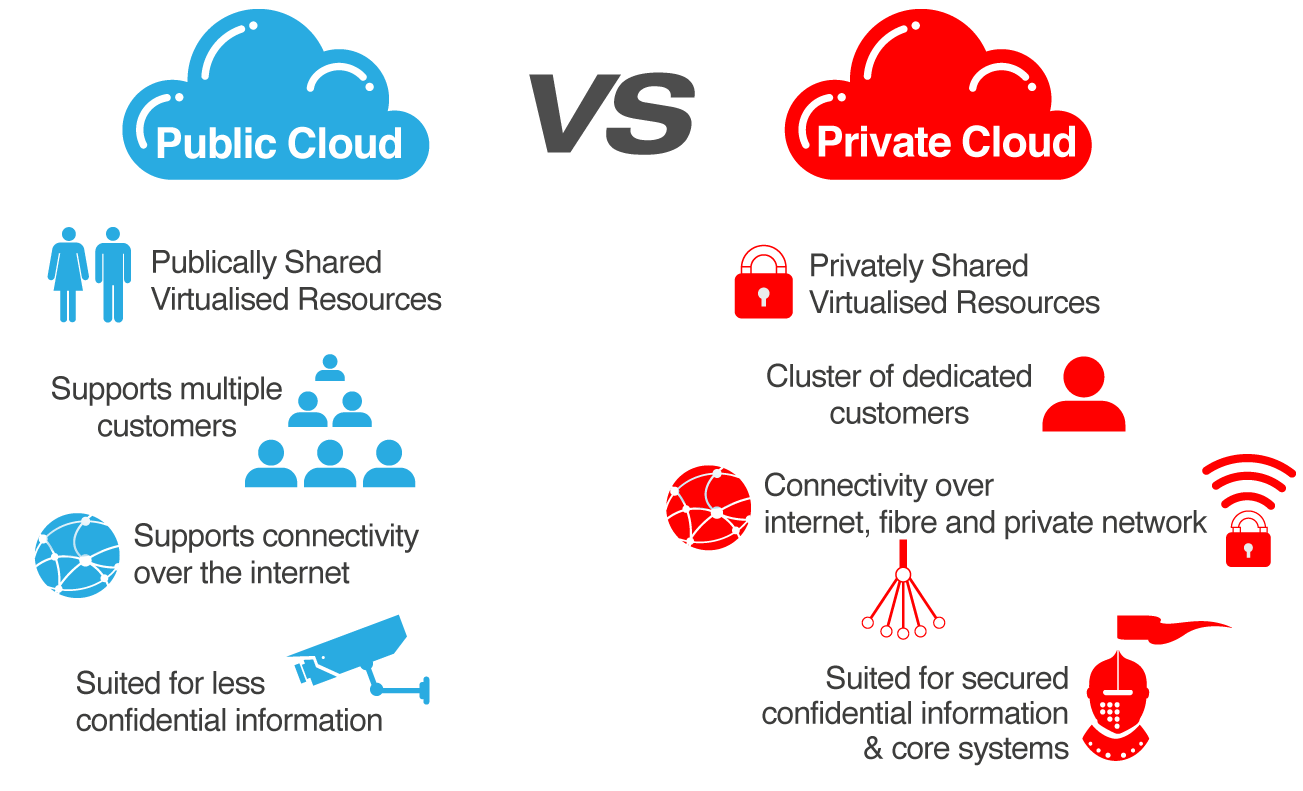
Telme BladeBox — Private Cloud
Your systems and your data under your control.
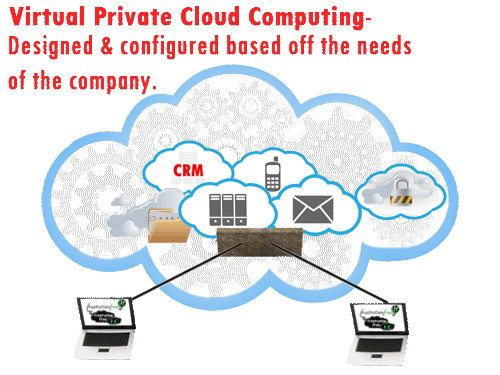
The BladeBox is a dedicated server, exclusively yours, that can reside in your own data centre or in a colocation facility, accessible through an encrypted tunnel and protected by a firewall — a controlled environment with the flexibility of a full cloud.
Benefits of a private cloud with BladeBox:
- Greater security and privacy — your data stays out of reach of third parties, on infrastructure only your organisation can access
- Full control — you configure and manage the environment to your needs, with complete audit capability
- Efficiency — integrated virtualisation that optimises hardware usage and reduces operating costs
- Reliability — when hardware resources are under your control, responsiveness and recovery are incomparably faster